

Medicinal Stories
I have been working on an essay that I would describe as a doozer. That is the only descriptive word that comes to mind. It is about staying with the right hemisphere in play therapy and it builds a new metaphor to conceptualize our work. I am having a great time writing it but it is long and multilayered and is about some of the deep theoretical foundations of my play therapy practice.
It feels important and also heavy.
It’s an essay from the roots.
While I was writing and thinking and changing and expanding and editing that doozer, a thought arose ‘I should write something light and fun. Something up in the leaves with dappled sunlight and a breeze.’
After all, this newsletter is about play therapy and while it is an effective, compelling, complex therapeutic modality it should also include light and fun.
I have said to families that I work with, parents, that the child has to find the play therapy process fun. I want it to feel special and enjoyable. Otherwise, it isn’t working. I think as therapists we can enjoy the work too. There should be some delight in the room.
It’s a space curated for pleasure, for play, for creativity, for freedom, for expression, for permission, for self actualization.
And, there is a warm, attuned adult holding space. She is glad to see that child time and time again.
So, my idea for something light to write about – my love of story books.
Because we work in the right hemisphere, we communicate with images and metaphors, as that is an integral part of the right hemisphere’s communication. One tenet of the theory in Expressive Play Therapy, the work of Marie José Dhaese, is about healing from the inside out and the outside in.
She teaches, that for each time that the child heals from the inside out (meaning they bring an expression from inside themselves out into the room to be transformed) they then need several experiences of healing from the outside in (meaning they will absorb the safe, warm therapeutic relationship, the supportive sensory environment of the room, the elements of nature, or, whatever else nourishes them) until they are ready and able to heal from the inside out again.

Stories can contribute to the child’s healing from the outside in.
I can gift them metaphors, images, and that cozy, nurturing experience of being read to.
A mid-essay note: I thought this was going to be light and fun, about my favourite books. I do go there, but the more my fingers move on the keyboard the deeper and more nuanced it gets. It seems like every time I write, I open a little gnome door to explore one thing and pretty soon I am falling down an inspiring play therapy rabbit hole and having a great time while my essay wanders around.
In play therapy children communicate and heal using the language of symbols and metaphors. This is the only way that implicit memory can express what needs to be expressed in order to process, integrate, and transform. In the sand tray, a 7 year old builds a world for rabbits including safe little dens, and a watering hole, plenty of carrots, and even a creativity corner where they can paint or play music. This is deeply meaningful.
Other symbols and metaphors may be more intense, or scary, perhaps touching into overwhelm when there is unprocessed traumatic material and activation in the nervous system.
So, when a child is in my room, I want to offer them warm, healing symbols and metaphors that they can receive from the outside in. This can be medicinal. This can give them something beautiful to place beside what feels intense or scary.
This is the intention of the stories I read. Metaphor gift delivery.
I have spent so many hours sitting on the floor in Chapters bookstore reading stacks of picture books searching for the ones that say something meaningful, in a beautiful narrative, with lovely pictures. It’s a wonderful way to lose time. I settle in cross legged in the aisle, take my shoes off so I am in socked feet, place my tall tea cup beside me on the floor, and read.
I search for the books that say something I would like to offer to the children I work with in therapy because I can’t say things explicitly like, ‘I know you have been through some things that feel hard but humans heal and evolve and life can feel so much better afterwards’, but I can read a story about a bunny that gets stuck in a thunder cloud and finds her way out to become a shiny, more confident version of herself.
A few of my very favourite books:
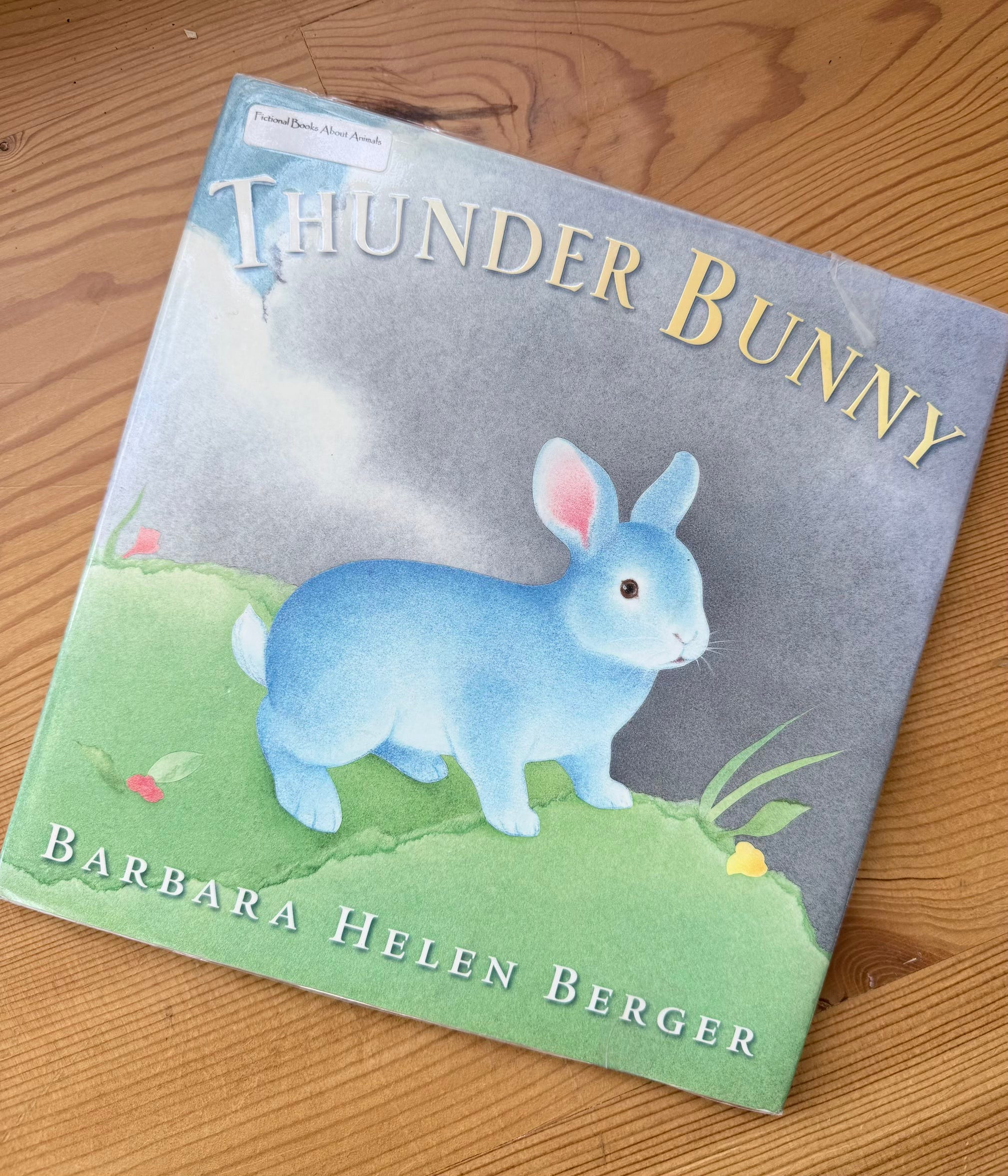
Thunder Bunny by Barbara Helen Berger is out of print. I somehow have four copies because it really is that good. It is about the aforementioned bunny that feels different than her family, runs off and gets stuck in a thunder cloud, manages to connect to her true self, and then returns home as a more glorious version of herself. ‘She wasn’t only a bunny now. She was a sun and moon bunny. Clear and true and out of the blue. Thunder Bunny, is that you? Yes, she said. Here I am.’
That quote came from memory. This book is a perfect metaphor for trauma healing, connecting to your true self, and feeling free.
A side note: After writing those last paragraphs I feel compelled to comment on how a play therapist’s most beloved book might become so beloved because it holds metaphors that resonate with her own story of becoming authentic. Perhaps, so much that a therapist may have four copies, know the words by heart and even have thought about getting a Thunder Bunny tattoo.
I can’t say directly to a child client “All of you is welcome here. I’ve got this. I can hold space for you and all the parts of you that feel scared, scary or like they are too much. Being here with me may allow you to feel more ease”. But I can read that child When the Sun Rose, also by Barbara Helen Berger. Also out of print. And, also I have multiple copies.
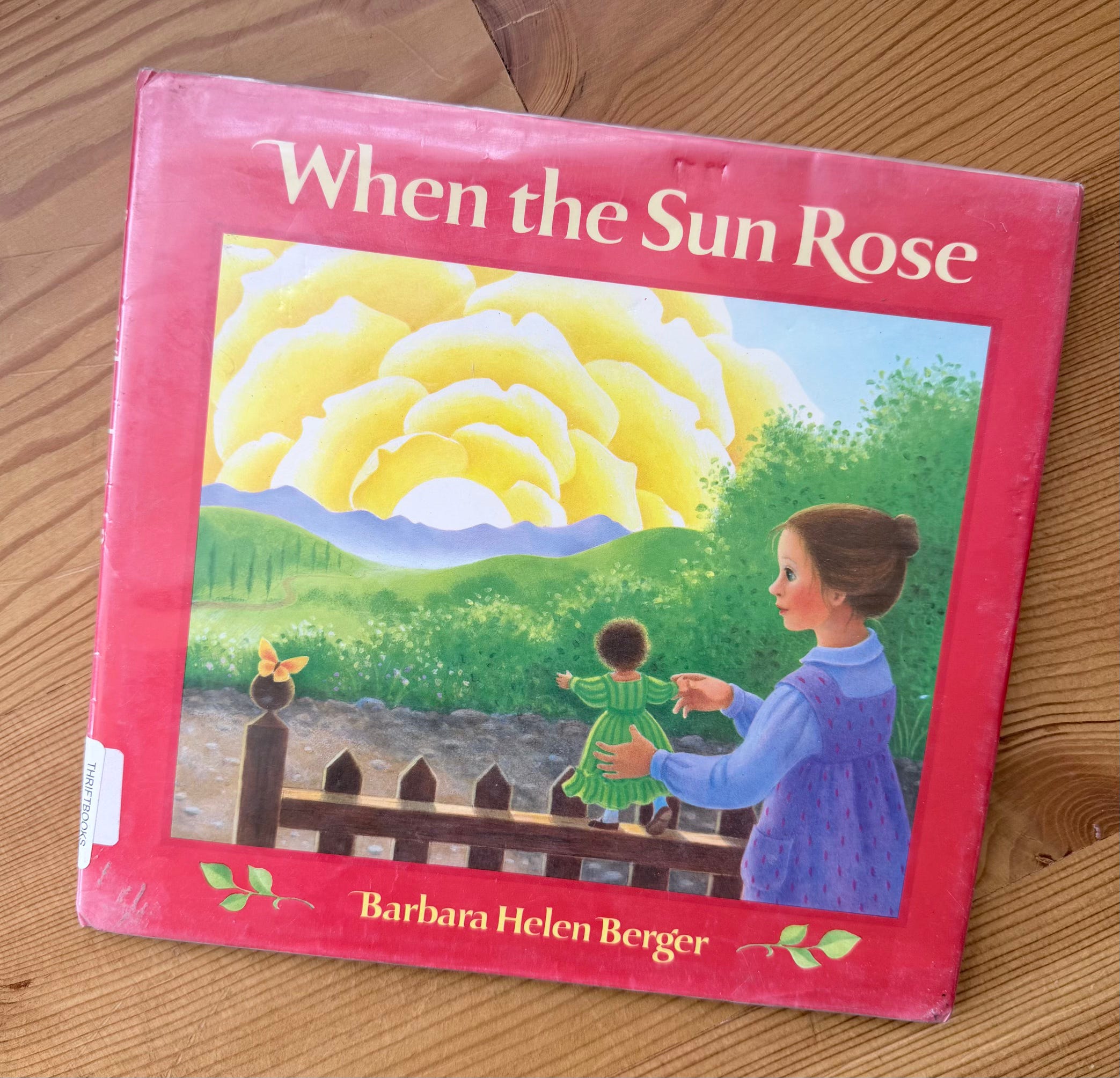
The young friend in the story, arrives at the playroom with her lion. My favourite line is when she enters the playhouse and her lion’s footsteps are as light as sunlight on the floor. Then, then, then as the two girls colour together the lion eats blueberries and cream an then falls asleep on the floor.
I am swooning.
I am also feeling vulnerable as I am aware that my weirdness is showing.
I can’t say to a child “The therapy process can feel hard sometimes, scary things may come up, but as long as we keep going together, we can handle it, and when we come out on the other side of the darkness you will not believe the magnificence of your own light”. But, I can read them Beyond the Pond by Joseph Kueffler.
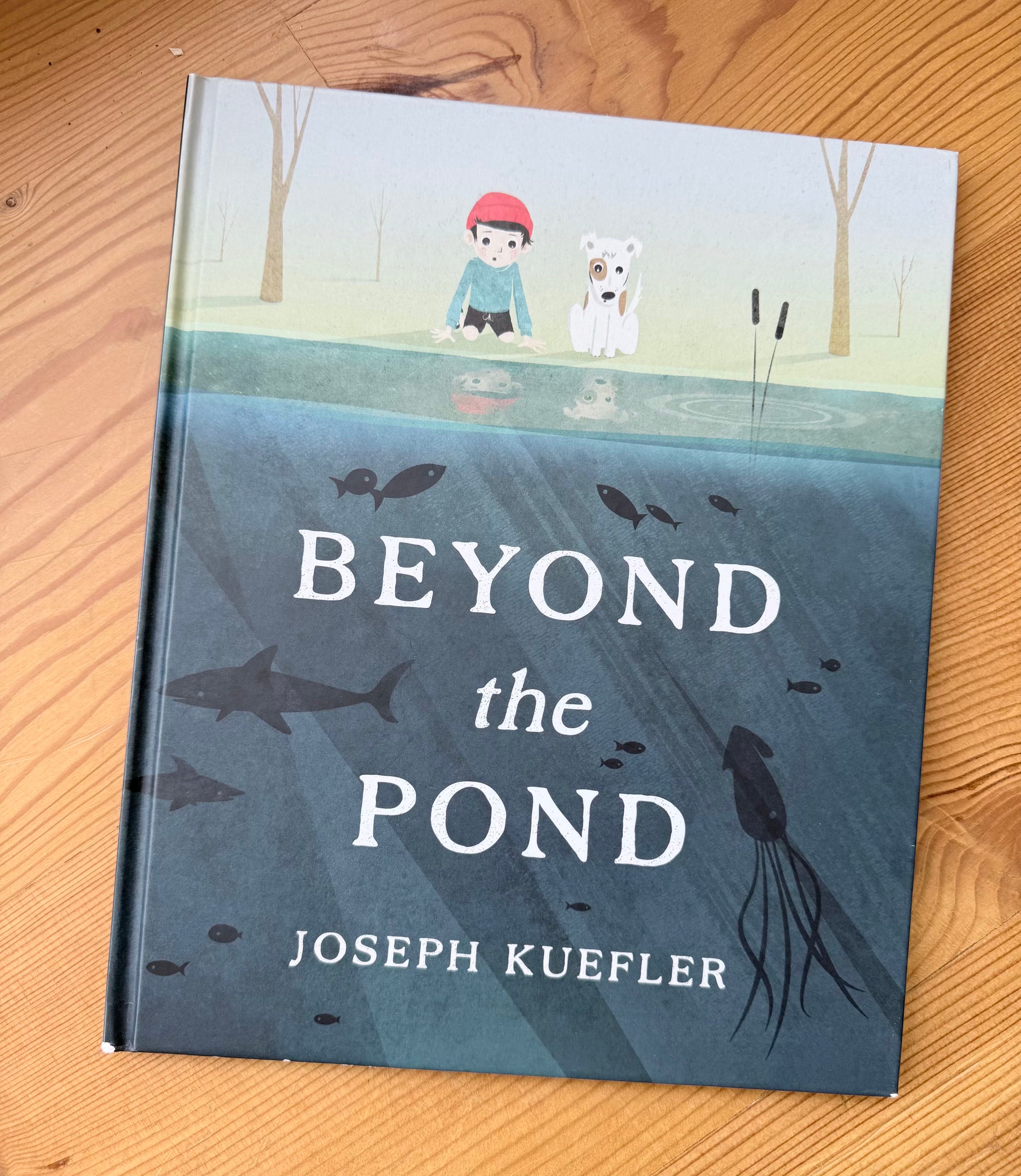
A little boy and his dog go on an adventure into the depths of a pond in his backyard, experience some frightening things, find a glorious world, and when they return home the world looks different, more interesting. It’s a beautiful metaphor for healing.
I can’t say “Sometimes it is really hard to find words and use your voice and say what is true but with practice you can connect with your empowerment” or “Sometimes kids are mean but they get what’s coming to them in the end” but I can read them Willow’s Whispers by Lana Button.
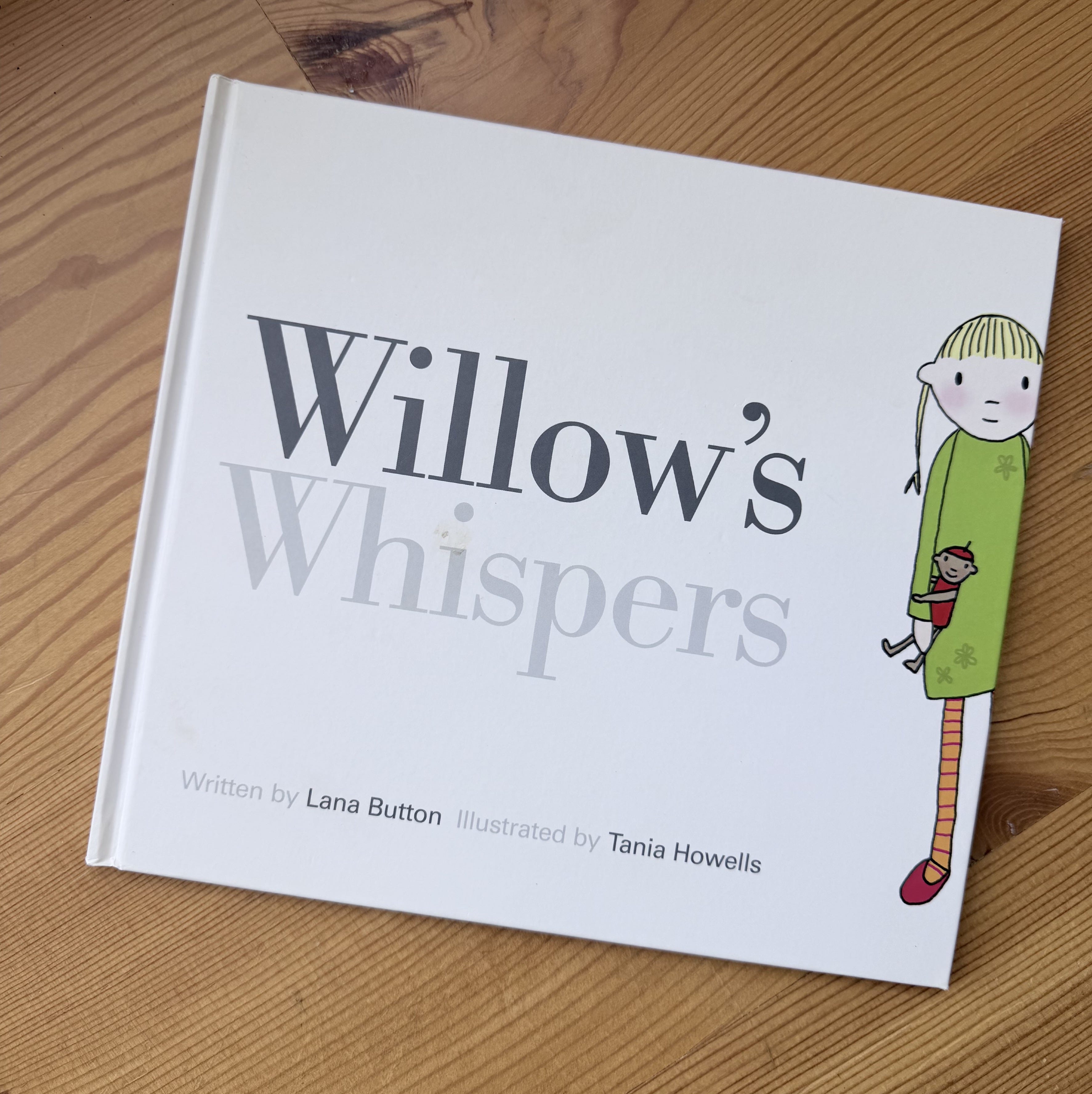
The moment when Willow’s voice bubbles up and loudly sets a boundary with the girl who keeps taking the dollhouse baby is perfection. This story addresses a few types of challenges and I have spent time with children that want to read it again, and again, and again.
I can’t say to a child client “You are deserving of love and acceptance even if you behave in the most awful and offensive ways. All of you is welcome here. You are valued no matter what” but I can read them I Love You Stinky Face by Lisa McCourt.
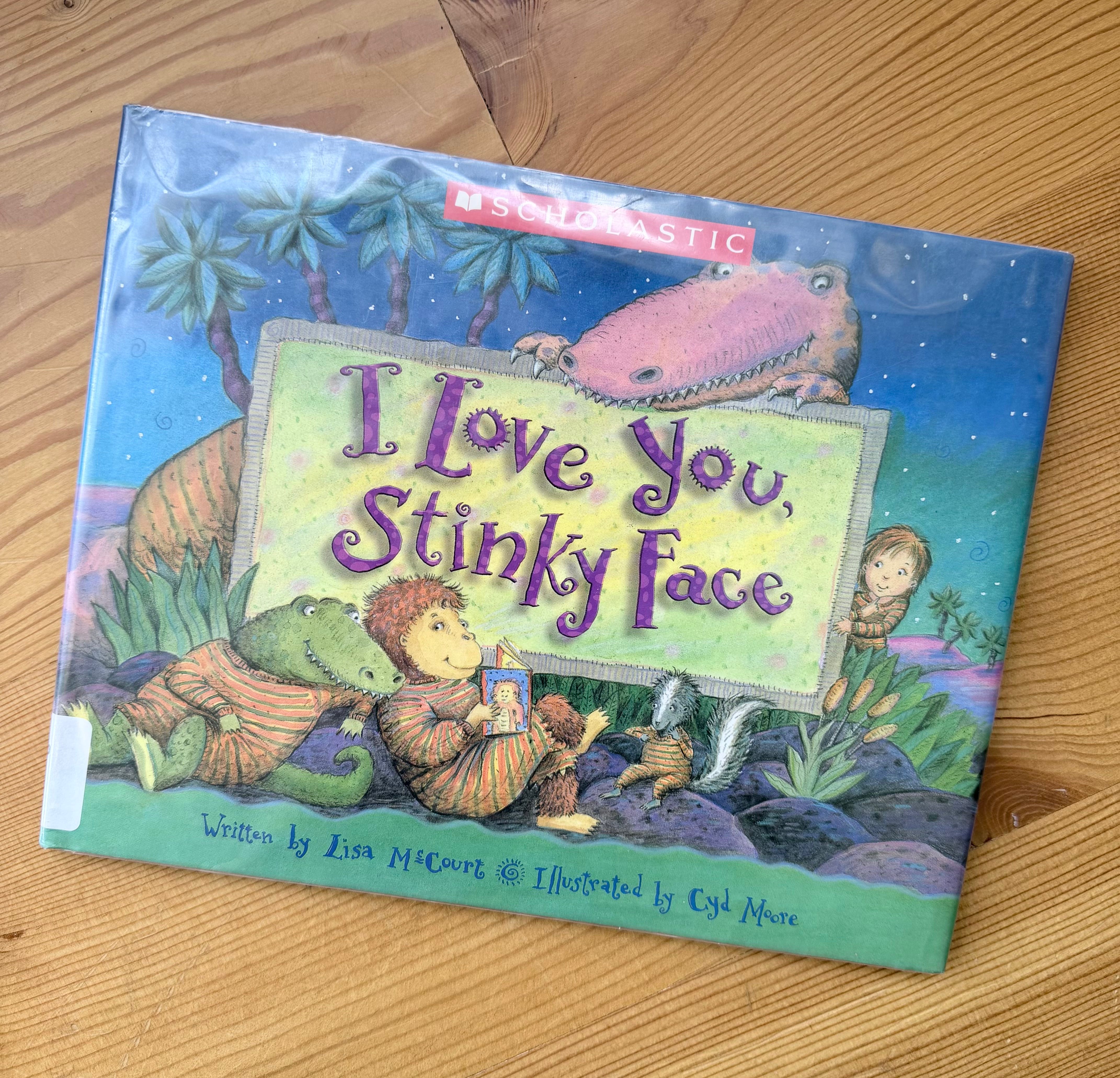
I learned of this story from a friend I made in play therapy trainings and I have been sharing it regularly ever since. Now I find myself in supervision sessions, saying often, “Have you read I Love You Stinky Face?”. This one is true medicine for children who feel like they are framed as the problem, or not good enough, or behave in ways that are bad or unacceptable which makes them bad and unacceptable.
It’s a beautiful metaphor to say “All of you is welcome here.”
Each play therapy session has an intentional beginning, middle and an end. The theory behind this structure is that we are not guaranteed to see the child again after they leave our playroom. Life is complicated and things change and sometimes there is an abrupt, unplanned ending to our work together. If I can’t go through the process of closing our therapeutic relationship the way I like, I am going to at least go through the process of closing each session in a way that feels complete.
In the last ten minutes of every session we read a story while the child has a crunchy snack, we make a wish on a beeswax candle, and they choose a treat or pocket treasure before they head out the door. I mean, it does not unfold in that way with every child. I have met a few that do not tolerate books or being read to. A few that are not able to use the candle (or want to spit on it which is more common than you might think). But, if they are unable engage in this closing practice we come to make a special ending of our own that fits them.
Every element of every session is created and offered with care.
I hope that somewhere in that meandering river of words you picked up some that feel like a sparkle of sunlight. Or a soft breeze. And, hopefully, in some way they are useful.
See you soon for the Doozer.
Thanks for reading,
Warmly,
Rachael.

© Relational Embodied | All rights reserved | Privacy Policy | Terms | Website Design by field digital
